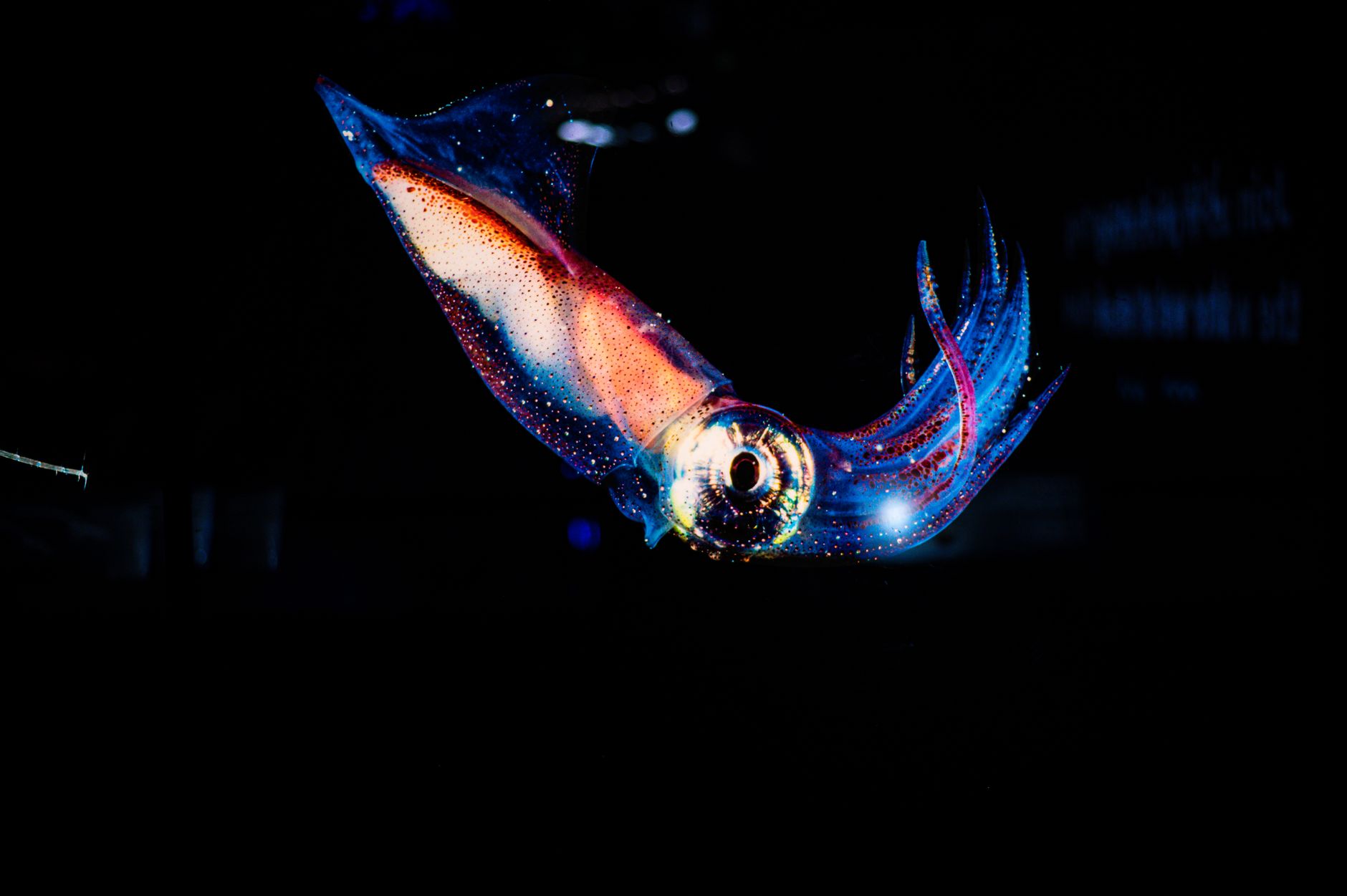
Giant squid
300–1,000 m
Up to 13 metres long, with the largest eyes of any animal on Earth.
A dive in five zones
From the bright surface to the bottom of the Mariana Trench: 10,935 metres of water, pressure and strange light.
The ocean covers 71% of our planet and most of it is dark. Breathe in, and follow the light down.
0–200 m
0 °C
200–1,000 m
0 °C
1,000–4,000 m
0 °C
4,000–6,000 m
0 °C
6,000–10,935 m
0 °C
300–1,000 m
Up to 13 metres long, with the largest eyes of any animal on Earth.
600–1,200 m
Lives in the oxygen-poor midwater and sheds glowing mucus to escape predators.
3,000–4,000 m
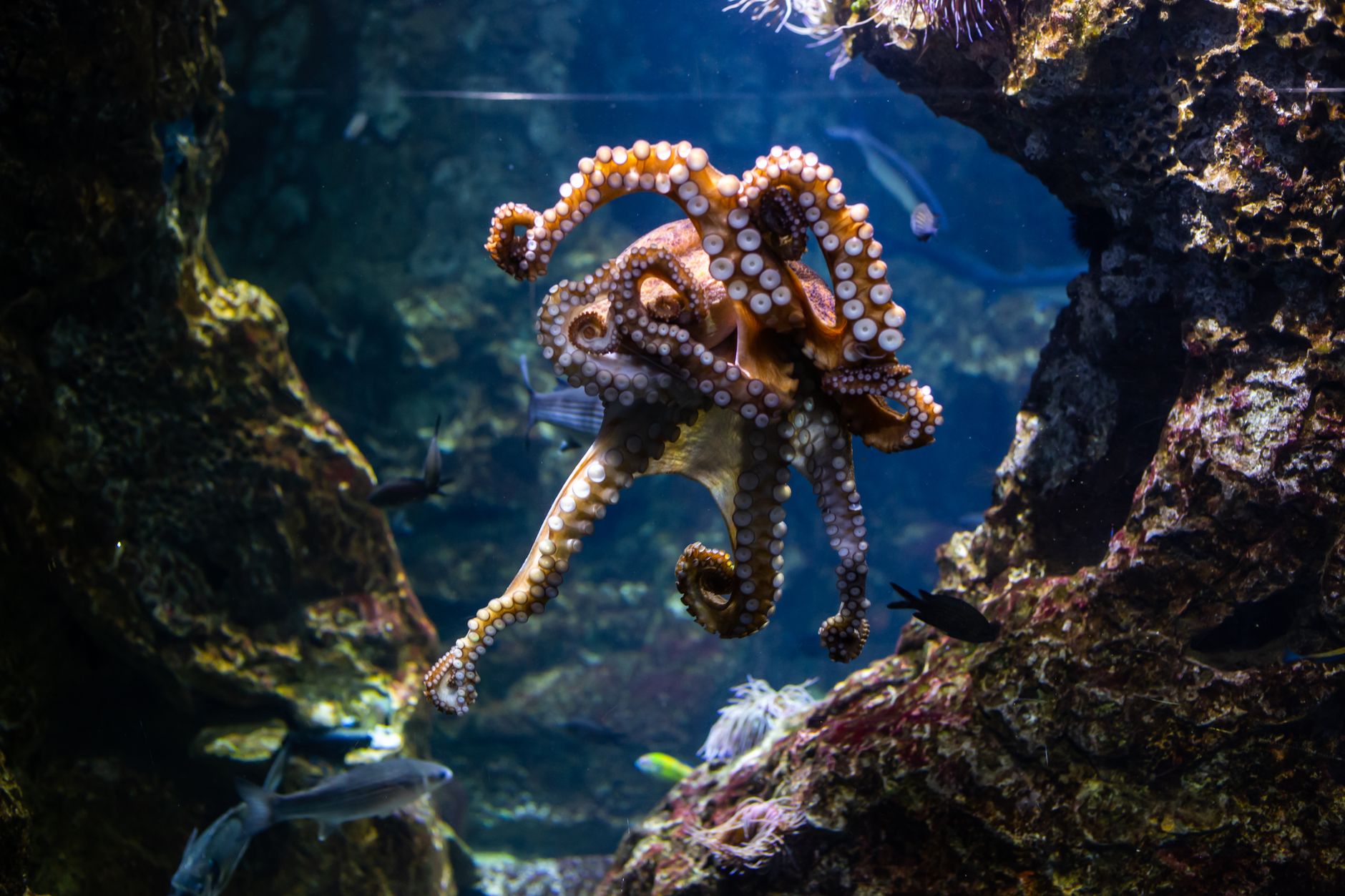
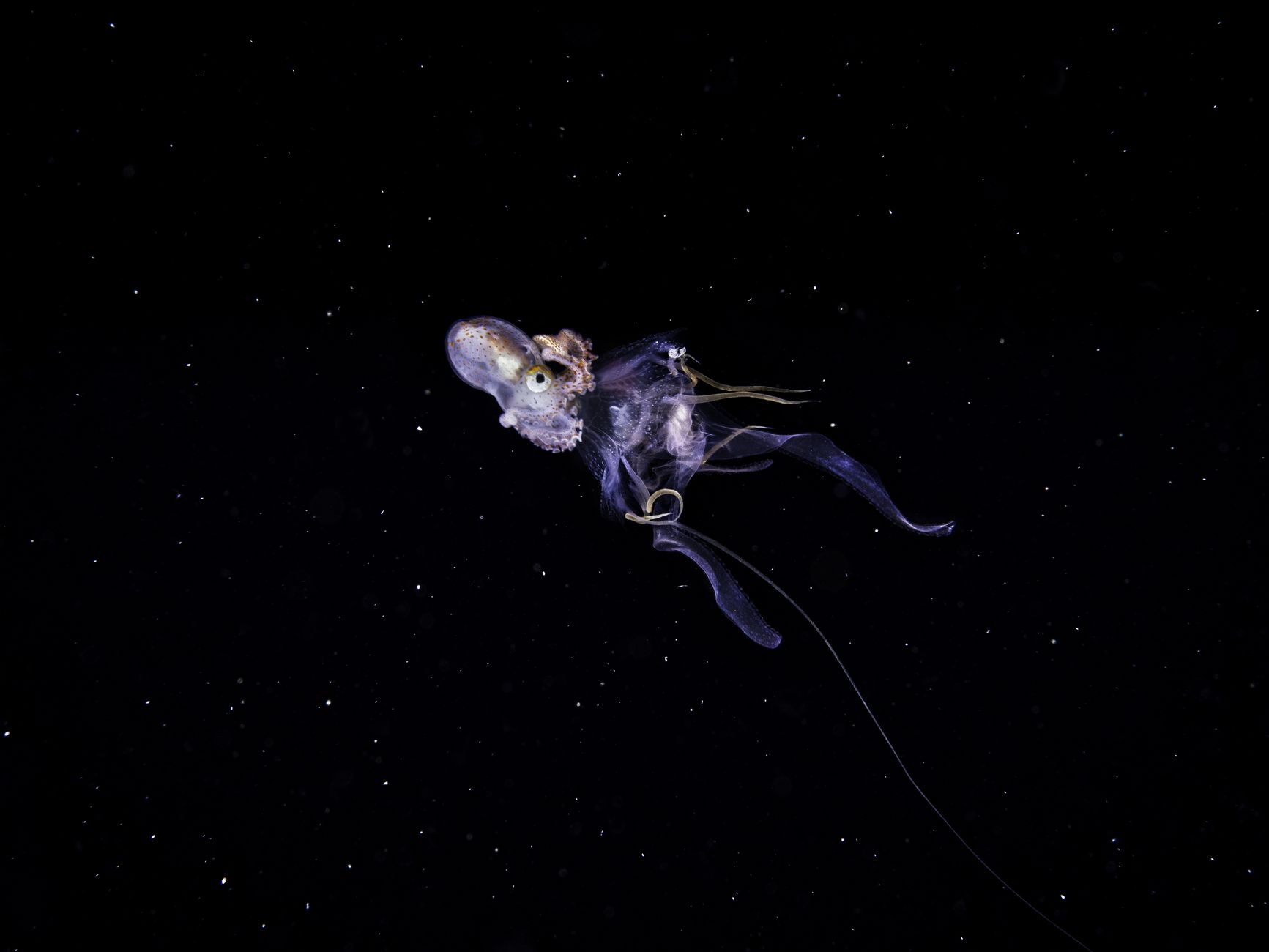
Flaps ear-like fins to hover above the seabed. Some have been filmed beyond 7,000 m.
200–4,000 m
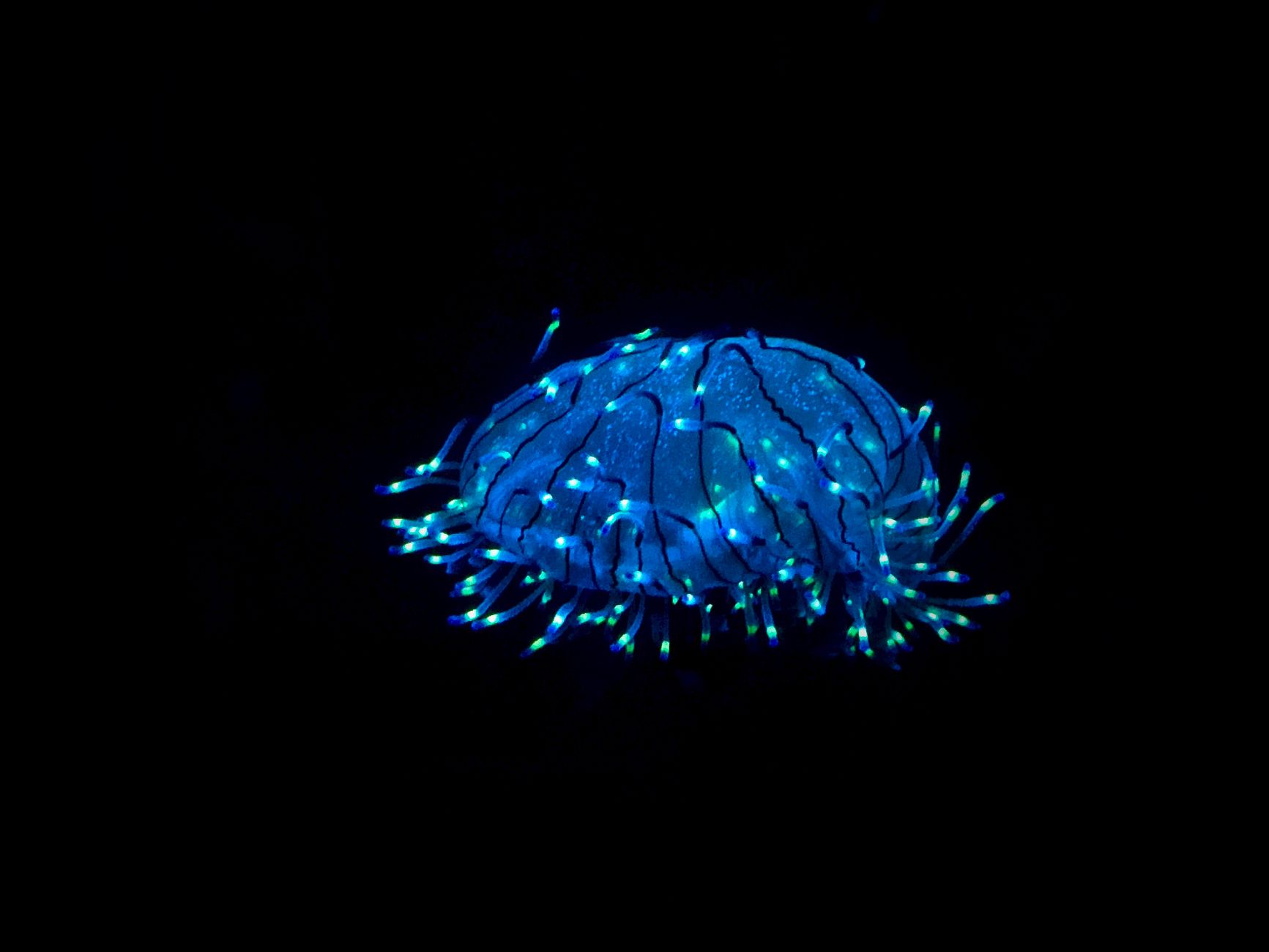
Many species glow, flashing blue light to startle attackers or call for help.
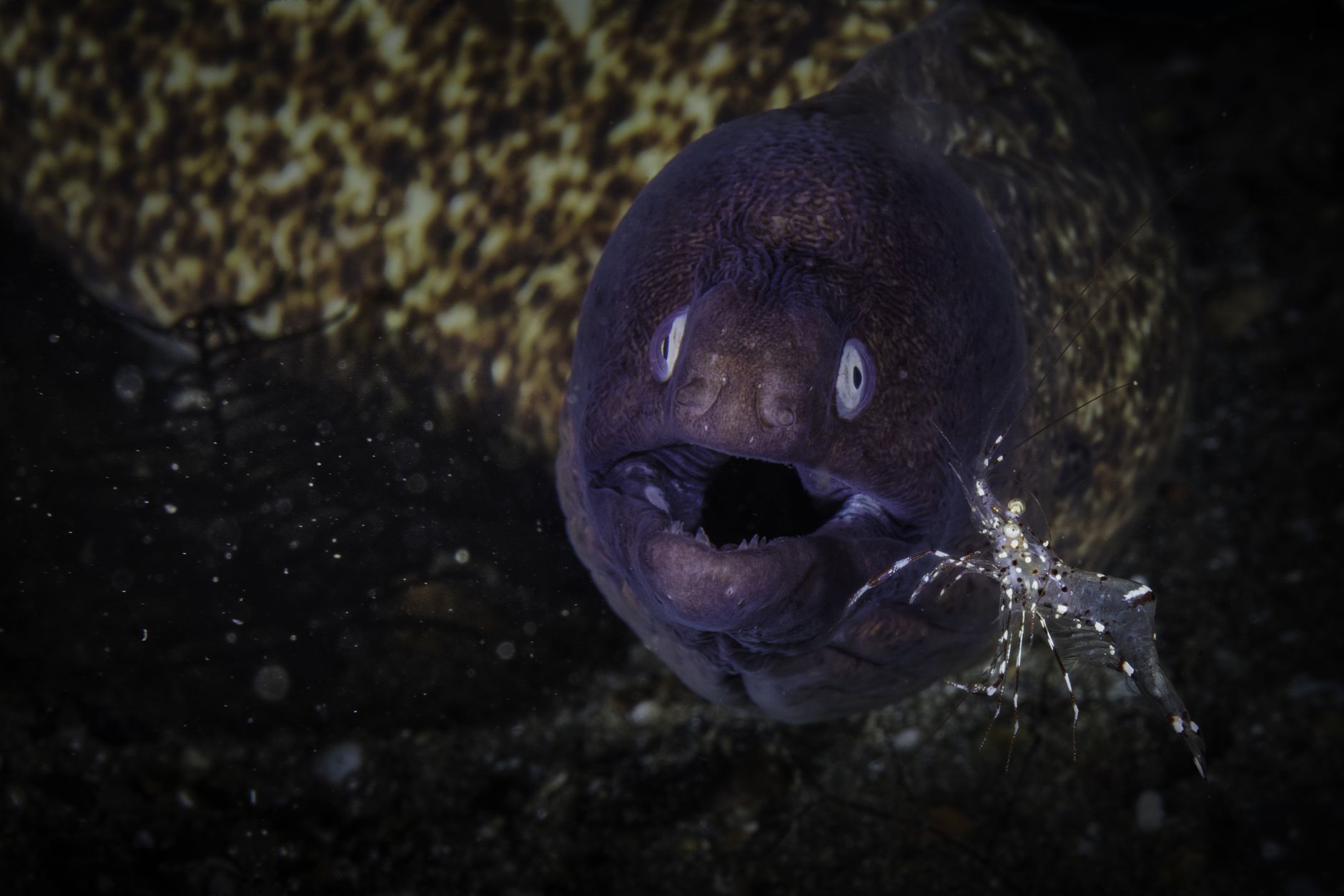
500–3,000 m
A hinged, balloon-like mouth lets it swallow prey bigger than its own body.
1,000–4,000 m
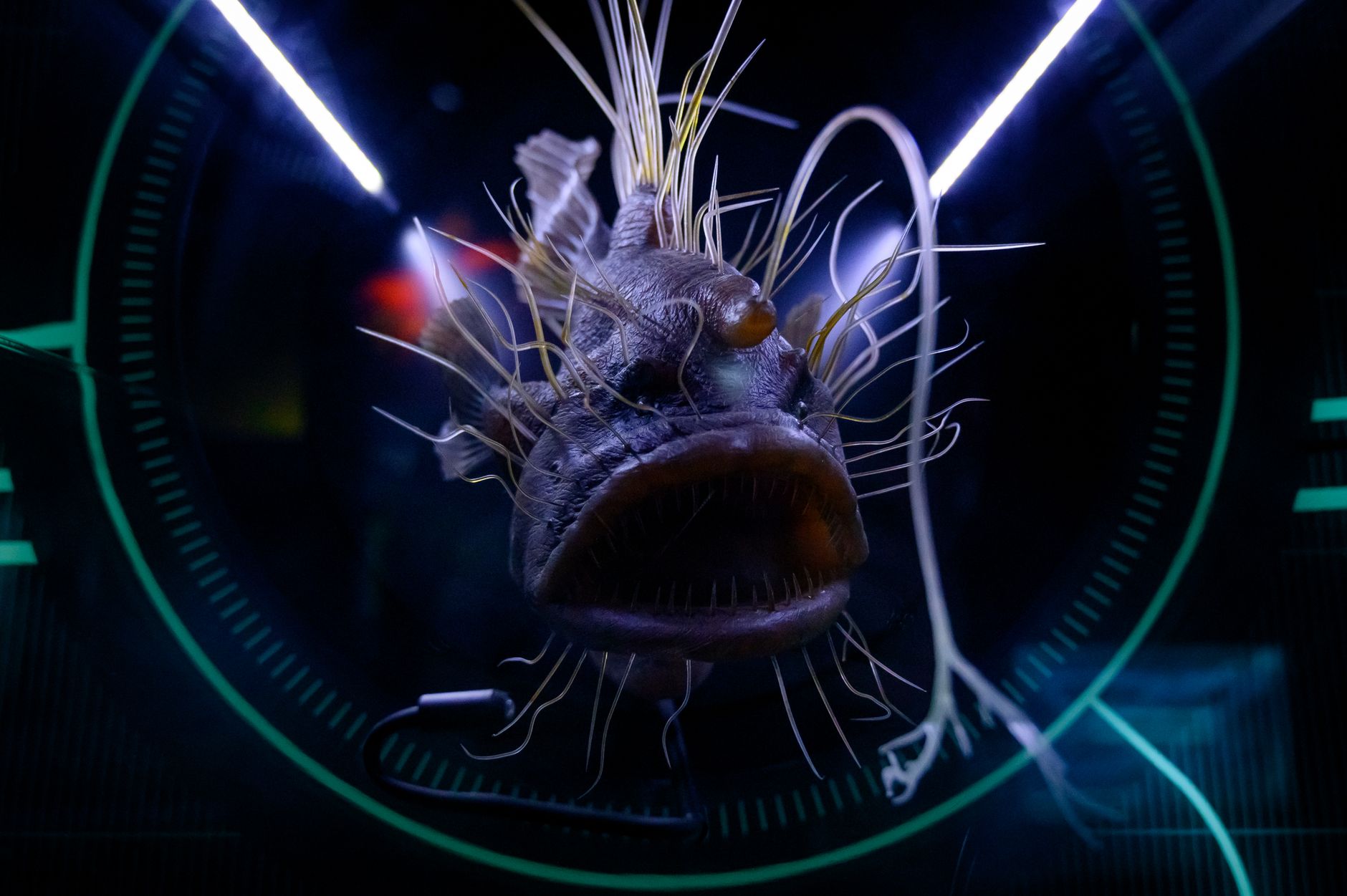
Females carry a glowing lure; the tiny males fuse to them for life.
We know more about the surface of the Moon than the floor of our own ocean, yet every second breath we take comes from the sea.
Challenger Deep, 10,935 m
You have reached the bottom. Now help keep it wild: a pledge is a promise to choose less plastic, back protected waters and share what you saw.
18,412 of 25,000 pledges
Swap bottles, bags and wipes. Plastic has been found in the Mariana Trench.
Support high-seas treaty campaigns and 30% ocean protection by 2030.
£12 puts one school class through our Deep Ocean workshop.